
Why Cities are Trading Celebrities for Scientists on Billion-Dollar Billboards
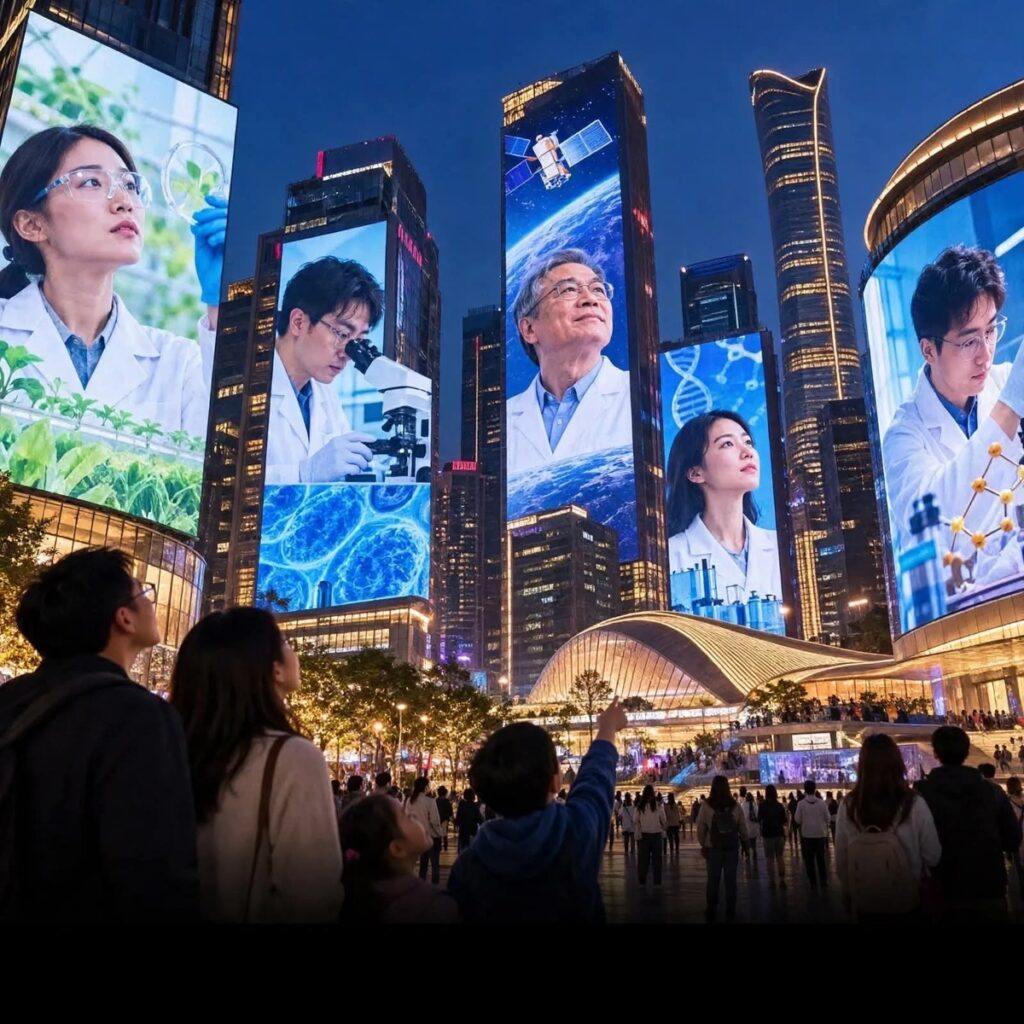
Imagine walking through a bustling urban shopping district. The towering digital screens overhead are glowing—but they don’t feature the latest pop star, fashion influencer, or smartphone. Instead, staring back at you is a massive portrait of a nuclear physicist, an aerospace engineer, or a Nobel laureate.
This is not a hypothetical corporate social responsibility presentation. It is exactly what began unfolding across major Chinese urban centers in August 2026. What started as a single localized decision by a shopping mall has sparked a viral, international conversation about leadership, cultural alignment, and how society defines its greatest role models.
From Luxury Ad to Scientific Legend
According to reporting by ThinkChina, the trend traces back to the Shanxian Ginza Mall in Heze, Shandong Province. Management at the commercial venue voluntarily took down a lucrative consumer advertisement and replaced it with a giant 7.8-by-5.6-meter portrait of a young Qian Xuesen, the historic father of China’s space program.
The decision was driven by a desire to give children and young commuters a different perspective on status. Rather than celebrating transient entertainment fame, the venue put knowledge, discovery, and service on the grand stage usually reserved for commerce.
The initiative quickly took off organically. Commercial venues and transit authorities in major cities—including Zhengzhou, Hangzhou, Hefei, and Chongqing—began dedicating their highest-traffic digital assets to the “backbone of the nation.”
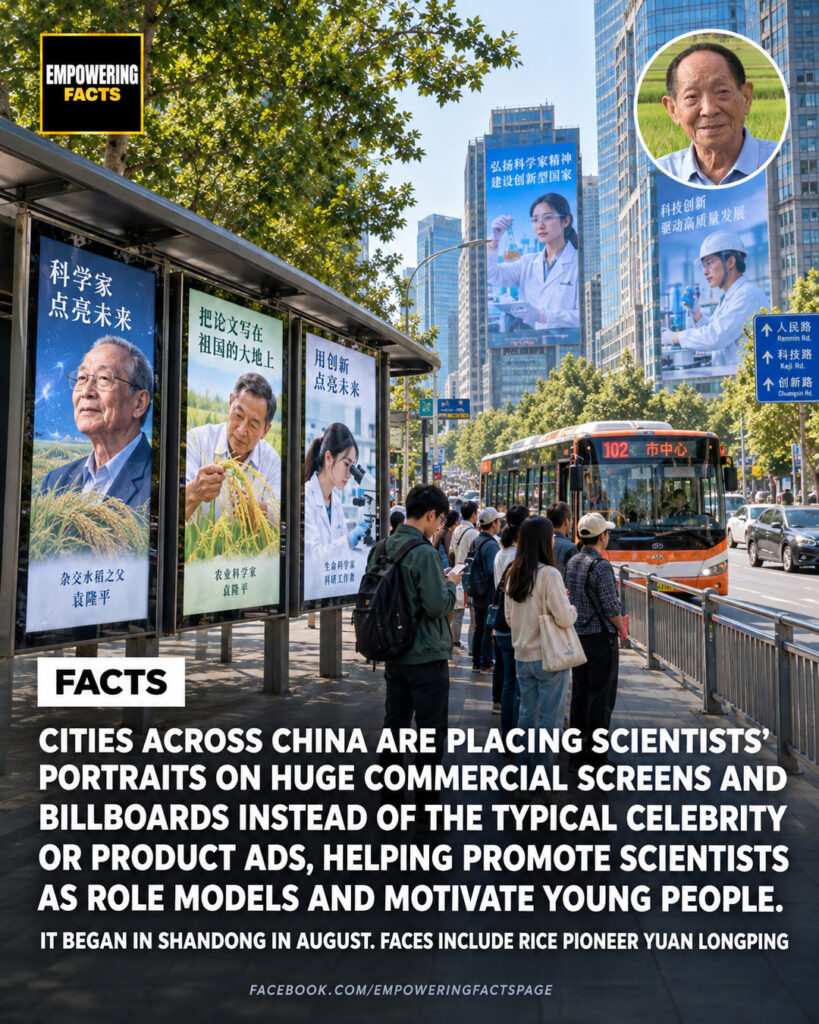
As documented by the Global Times, commuters passing through major hubs like Zhengzhou’s Convention and Exhibition Center metro station are now greeted by massive electronic displays celebrating:
- Qian Xuesen: Pioneer of aerospace engineering.
- Deng Jiaxian: Nuclear physicist and a key architect of early foundational science.
- Yuan Longping: The agronomist whose hybrid rice breakthroughs saved millions from hunger.
- Tu Youyou: The Nobel laureate whose discovery of artemisinin revolutionized global malaria treatments.
The Leadership Takeaway: What We Celebrate, We Cultivate
For executive leaders and policymakers, this shift highlights a profound lesson in cultural engineering. The campaign has not been driven by centralized government mandates; rather, it operates as a voluntary public-service initiative by commercial entities choosing to align their platforms with deeper values.
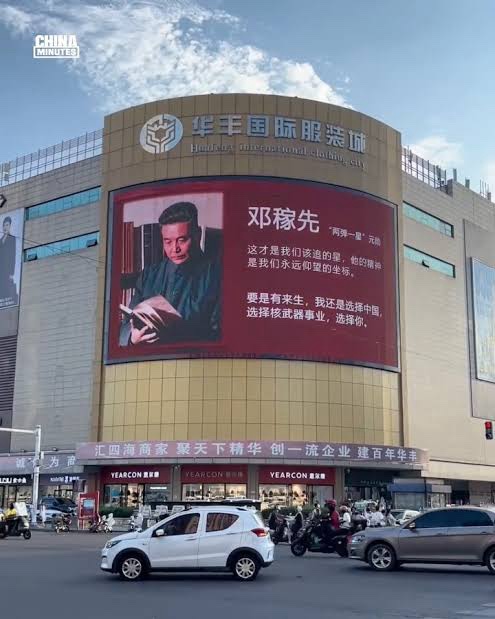
On global social media platforms, the visual contrast of scientists occupying premium retail real estate went viral. As noted in a feature analysis by the Leadership News, the growing campaign sends a striking message to the world by positioning these researchers as society’s true “top stars.” It fundamentally reframes who deserves public recognition, prompting international observers to ask a powerful question: Why aren’t our own cities doing the same?
Ultimately, culture is shaped by the behaviors and individuals an environment chooses to elevate. By treating intellectual giants with the same prestige typically reserved for luxury brands, these spaces are actively shifting what the next generation aspires to achieve. For leaders looking to drive innovation, the formula is clear: if you want your organization or society to value knowledge and long-term societal progress, you must give your innovators the biggest stage.
Drafted in collaboration with Gemini