What the Scrutiny of Shohei Ohtani Reveals About Modern Excellence
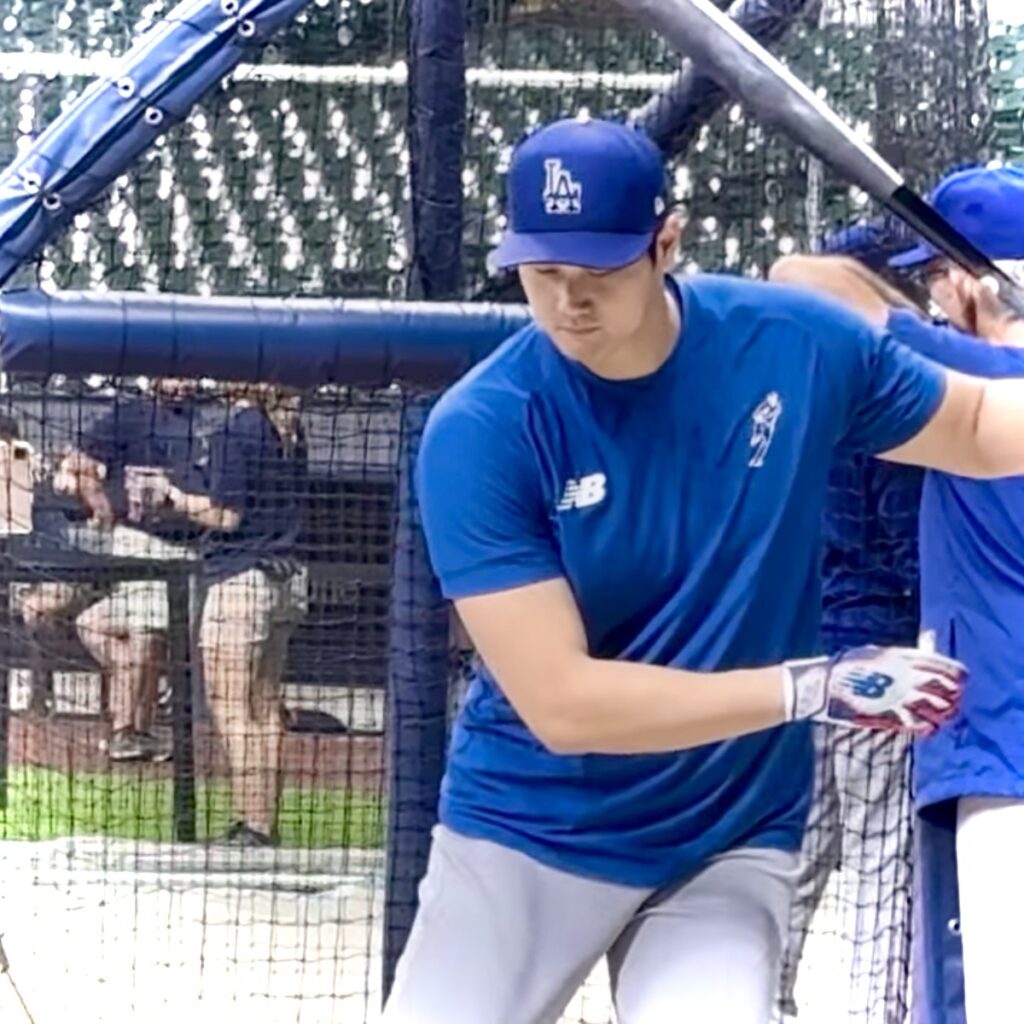
When the world’s top baseball star has gone under the radar for 3 months, questions arise., After the Los Angeles Dodgers officially announced on 19 July 2026 that they were easing Shohei Ohtani out of his pitching duties, sports forums immediately filled with intense concern. Because Ohtani represents a historic cornerstone for the sport, observers wondered if there was more to the story than standard fatigue.
But the public narrative was practical and grounded: his body was simply feeling the historic grind of a two-way season. Lingering neck soreness, a tight right biceps, and inflammation in his left knee required a natural physical boundary. The team stepped in to protect Shohei’s long-term health, keeping him strictly in the lineup as a designated hitter. And then his bat went silent, weeks went by without the usual Ohtani home run. Days went by without a hit, an entire road trip went without Shohei in the lineup. The ensuing high level of public concern surrounding Shohei Ohtani shows just how uniquely he is watched by the world.
CHAPTER I: THE DUGOUT MICROSCOPE
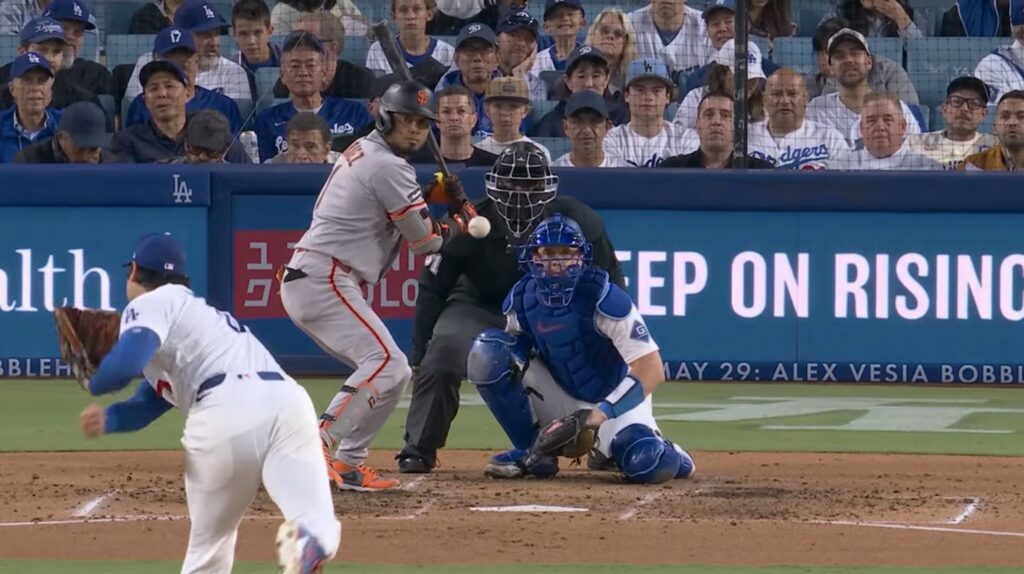
Modern sports networks frequently utilize a dedicated ‘Ohtani Cam’ that stays fixed on him even during commercial breaks. Viewers see every minor focus adjustment, sigh, and routine habit he exhibits for three consecutive hours.
This total lack of privacy is why standard baseline behaviors—like spitting in the dugout—can sometimes be amplified into unprecedented photo ops, if it is done by Ohtani. Spitting has long been an everyday, traditional element of American baseball culture. However, for his first seven years in the Major Leagues, Ohtani strictly followed the customs of Yakyu (Japanese baseball), which views the diamond as a clean, deeply respected space. Over time, he has naturally adapted to the grit-and-dirt habits of the Western game. Because the cameras literally never turn away from him, fans caught the minor shift instantly, magnifying a standard athlete’s habit into a surprising Ohtani Cam focal point.
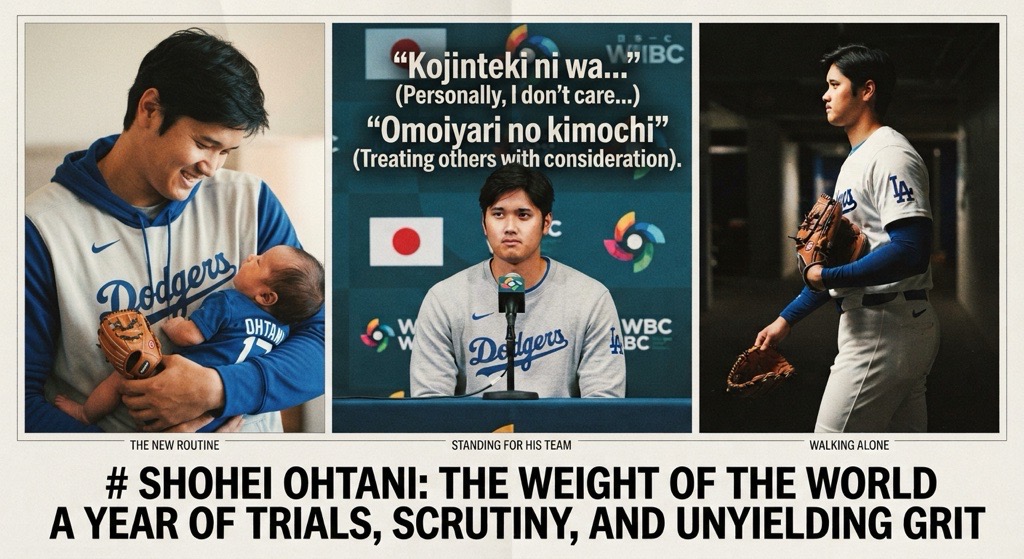
When a superstar is intensely private and communicates primarily through an interpreter, the media landscape can easily misread their quiet nature as detachment. Yet, the way Ohtani navigates this constant baseline noise highlights the true foundation of his leadership.
CHAPTER II: WINNING OVER THE NOISE
This relentless visibility often operates alongside a deeper, more subtle double standard in Western sports culture. While European imports are frequently embraced as natural heroes, East Asian athletes often navigate a unique layer of cultural skepticism. High-profile national analysts have publicly argued that Ohtani couldn’t truly be the “face of baseball” simply because he uses an interpreter, while local network commentators have occasionally stumbled into mocking his accent on live air. Even early commercial merchandise occasionally relied on outdated, exaggerated caricatures, and editorial photography has sometimes caught him at stylized, awkward angles reminiscent of old Hollywood typecasting.
What makes Ohtani’s climb to the top of the baseball pecking order so laudable is that he has never once validated this underlying xenophobia with a defensive response. Instead, he has used his flawless character to completely disarm it. Where other athletes might react with public frustration, Ohtani responds with an unshakeable, humble dignity.
This quiet strength was visible during the World Baseball Classic. When Team Japan faced a challenging, early exit, the roster faced a wave of intense disappointment from fans back home. Rather than letting his teammates bear the brunt of the criticism, Ohtani stepped forward on social media, intentionally absorbing the emotional weight of the loss: “We couldn’t reach the result we hoped for, and I strongly feel my own shortcomings.” When later asked about the public reaction, he quietly shifted the focus away from himself to protect his peers, stating that treating others with consideration should be the real priority. He understands that a perch at the top of sports is never permanent; any leader can fall at any time. The secret to his sustained success is a quiet endeavor to just do his job, be the best player he can be, support his teammates, and remain genuinely kind to everyone.
CHAPTER III: MECHANICS OF SYSTEMIC INTEGRITY
Because Ohtani’s personal principles are completely ironclad, external corruptive forces quickly realized they could never compromise him directly. Instead, modern illicit syndicates target the proximity of a superstar’s immediate circle. The objective is rarely just about the money itself; rather, gambling rings look to get close confidantes hooked and under their control, establishing leverage that can eventually be used to force a player into manipulating games.
Federal investigations completely cleared Ohtani of any wrongdoing, proving he was the victim of a massive, close-proximity fraud perpetrated by his long-time interpreter and closest friend, Ippei Mizuhara. An illegal bookmaking organization targeted Mizuhara, who ultimately systematically stole nearly $17 million from Ohtani’s bank accounts specifically to cover his own catastrophic, uncontrolled gambling debts. Mizuhara’s subsequent 57-month federal prison sentence for bank fraud exposed the exact, dark underbelly of systemic sports corruption.
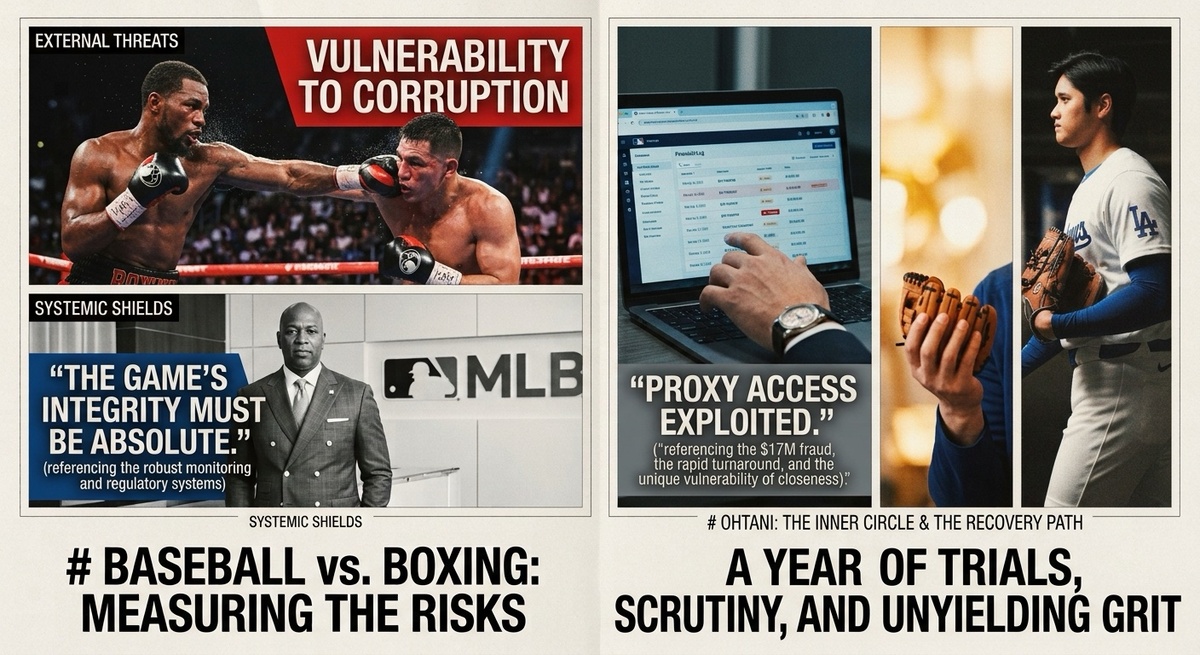
This exploitation highlights the significant structural mechanics and athlete dynamics that dictate the risk level across different sports landscapes:
| Dimension | Major League Baseball (MLB) | Professional Boxing |
|---|---|---|
| Susceptibility to Fixing | Lower (Historically): A single baseball player usually cannot guarantee the outcome of a game alone. Even top pitchers only play every few days, and batters fail 70% of the time. However, micro-betting (e.g., throwing a specific errant pitch) has introduced new vulnerabilities. | Extremely High: It only takes one person (the fighter) or a corrupt judge to completely alter the outcome of a match. |
| Financial Vulnerability | Low for Stars: MLB players have heavily guaranteed contracts and massive unions, making them incredibly difficult for syndicates to bribe. Ohtani’s $700 million contract makes him financially unassailable. | Very High: Outside of top-tier pay-per-view stars, the vast majority of boxers struggle financially, pay for their own camps, and lack structural safety nets, making them prime targets for bribery. |
| Regulatory Guardrails | Robust: MLB employs aggressive internal monitoring, utilizes data tracking firms, and relies on federal agencies to protect game integrity. | Weak & Fragmented: Boxing lacks a centralized league or commissioner. It is run by fragmented sanctioning bodies and state commissions, making oversight highly inconsistent. |
CHAPTER IV: A MASTERCLASS IN BALANCE
Shohei Ohtani’s true brilliance cannot be measured by traditional statistics alone. It lies in the classy, effortless way he has sailed through an unprecedented storm of personal betrayal, massive media scrutiny, and physical recovery. By refusing to let external noise alter his fundamental humility, Ohtani has redefined what it means to be a global icon. He doesn’t lead by commanding the room; he leads by remaining completely unassailable.