


How Small Businesses Can Grow and Stay Safe in 2026
Running a small or medium business (SME) in 2026 is a balancing act. Interest rates are high, bank loans are hard to get, and global markets are unpredictable.
Many business owners make the mistake of putting all their cash back into the company. Others leave their money doing nothing in low-interest bank accounts. To grow safely today, you need a two-part strategy. Think of your business finance as a car with two engines. One engine drives immediate growth. The other engine builds long-term safety outside the business.
1. The Growth Engine: Investing Inside Your Business
You cannot build safety by standing still. To protect your profit margins, put cash into internal tools that save time and lower costs.
- Simple AI Tools: In 2026, artificial intelligence is no longer futuristic; it is a basic tool. Invest in software that tracks cash flow automatically, handles customer sign-ups, or manages inventory. This saves your team hours of manual work.
- Local Supply Backups: Relying on distant global suppliers is risky due to changing trade rules. Invest in local or regional suppliers to keep your operations running smoothly.
- Flexible Cash Software: Use modern digital tools to manage invoices and payments. This keeps your cash moving without tying up all your capital.
2. The Safety Engine: Investing Outside Your Business
True financial peace of mind means you and your business can survive even if your industry hits a rough patch. You must protect some wealth outside the company walls.
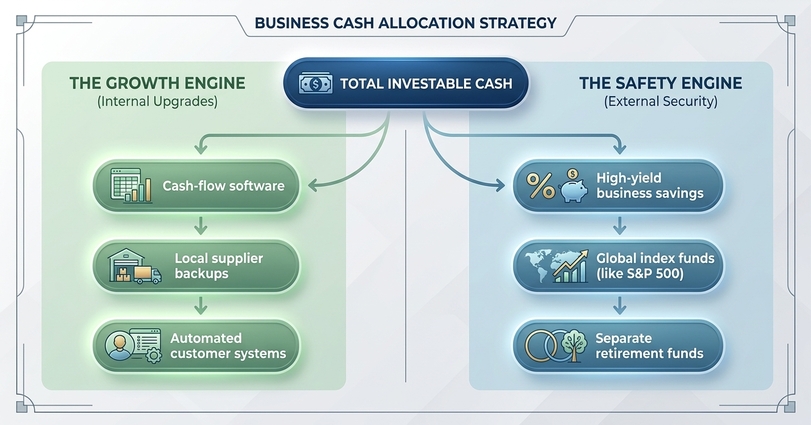
- A Solid Cash Reserve: Keep a separate cash pile that is easy to access. Because savings accounts offer good returns right now, use high-yield business savings or short-term government funds to grow this emergency cash safely.
- Global Index Funds: Move a small percentage of your profits every month into global stock market index funds, like the S&P 500. This builds a second source of wealth that does not depend on your specific business or location.
- Protect Your Assets: Set up your company legal structure so your personal home and retirement funds are completely safe. Business debts should never threaten your family’s financial future.
3. Quick Guide: Balancing Growth and Safety
| Feature | Internal Investments (Growth Engine) | External Investments (Safety Engine) |
|---|---|---|
| Main Goal | Increase sales and beat local competitors. | Protect wealth and create a backup plan. |
| Risk Level | High; tied to your local market and mistakes. | Low to medium; spread across many global companies. |
| Access to Cash | Low; locked in inventory or software. | High; can be sold and turned into cash quickly. |
| 2026 Focus | Easy AI tools and regional suppliers. | High-yield savings and stable global funds. |
How to Start: The 3-3-3 Rule
You can put this plan into action using three simple steps:
- Save 3 Months of Costs First: Before buying global stocks or expensive tools, build a cash reserve that can pay for three months of regular business expenses.
- Automate a 3% Siphon: Set your business bank account to automatically move 3% of your revenue into your safety engine every month. Treat it like a regular bill.
- Check Results Every 3 Quarters: Review your internal tools every nine months. If a software or supplier upgrade is not saving you time or money, stop funding it and save that cash instead.
By dividing your focus between smart internal growth and safe external savings, you protect your business from surprises while building real personal wealth.
Drafted in collaboration with Gemini